
How to Optimize E-commerce Product Descriptions for SEO
Product descriptions do two jobs at once: they help shoppers decide, and they help search engines understand what you sell. When those two jobs support each other, your product pages have a better chance of earning traffic and turning visits into sales. No drama, no magic wand, just clear writing and a little structure.
Start with search intent, not just product specs
Good SEO product copy begins with the question behind the search. A shopper typing “waterproof trail running shoes” is not looking for a brand history lesson. They want to know whether the shoes stay dry, feel comfortable, and fit their use case.
Before you write, look at the language customers use in:
- search results pages
- category filters
- customer reviews
- support questions
If you want a simple refresher on how search engines evaluate content, Google’s helpful content guidance is a useful place to start. For a broader overview of what SEO means in practice, SEO’s basic definition is plain enough to keep the mystery level low.
Find the right keywords, then use them naturally
Keywords are the phrases people type when they are looking for products like yours. The goal is not to stuff them into every sentence like they are packing peanuts. The goal is to place them where they fit naturally and help the reader.
Useful places to check keyword ideas
- Google Autocomplete and related searches
- Google Search Console, if your site already gets impressions
- Google Keyword Planner
- tools like Ahrefs or Semrush
For official tooling guidance, see Google Keyword Planner help. The best keyword is usually the one that matches real shopper language, not the one that sounds most impressive in a meeting.
Where to place keywords
- product title
- first paragraph
- one or two subheadings where appropriate
- image alt text, when the image truly describes the product
- meta description
Keep the wording natural. A sentence should read well to a human first. Search engines are smart, but they still do not reward awkward copy that sounds like it was assembled by a robot with a deadline.
Write descriptions that sell the benefit, not just the feature
Features matter, but benefits help people imagine the product in their life. A stainless-steel bottle is a feature. Keeping drinks cold on the commute is the benefit.
Try this pattern:
- Feature: 12-hour battery life
- Benefit: stays powered through a full workday or a long travel day
Example: Instead of writing “Made with breathable mesh,” try “Breathable mesh keeps the shoe light and comfortable during long walks or warm-weather runs.” The second version gives both the search engine and the shopper more context.
If you sell lifestyle or home goods, a little sensory language can help too. Words like smooth, soft, crisp, quiet, or easy can make a description feel more real, as long as they are accurate. Overpromising is bad for trust and returns are not a fun hobby.
Use bullet points and formatting to make scanning easy
Most shoppers do not read product pages like a novel. They scan. Bullet points, short paragraphs, and clear subheadings help them find the answer faster, which also helps search engines see a clean page structure.
A simple formatting checklist
- Use one clear H1 for the product or article title.
- Break long copy into short paragraphs.
- Use bullet points for specifications, dimensions, or care instructions.
- Include a short summary near the top.
- Keep important details close to the top of the page.
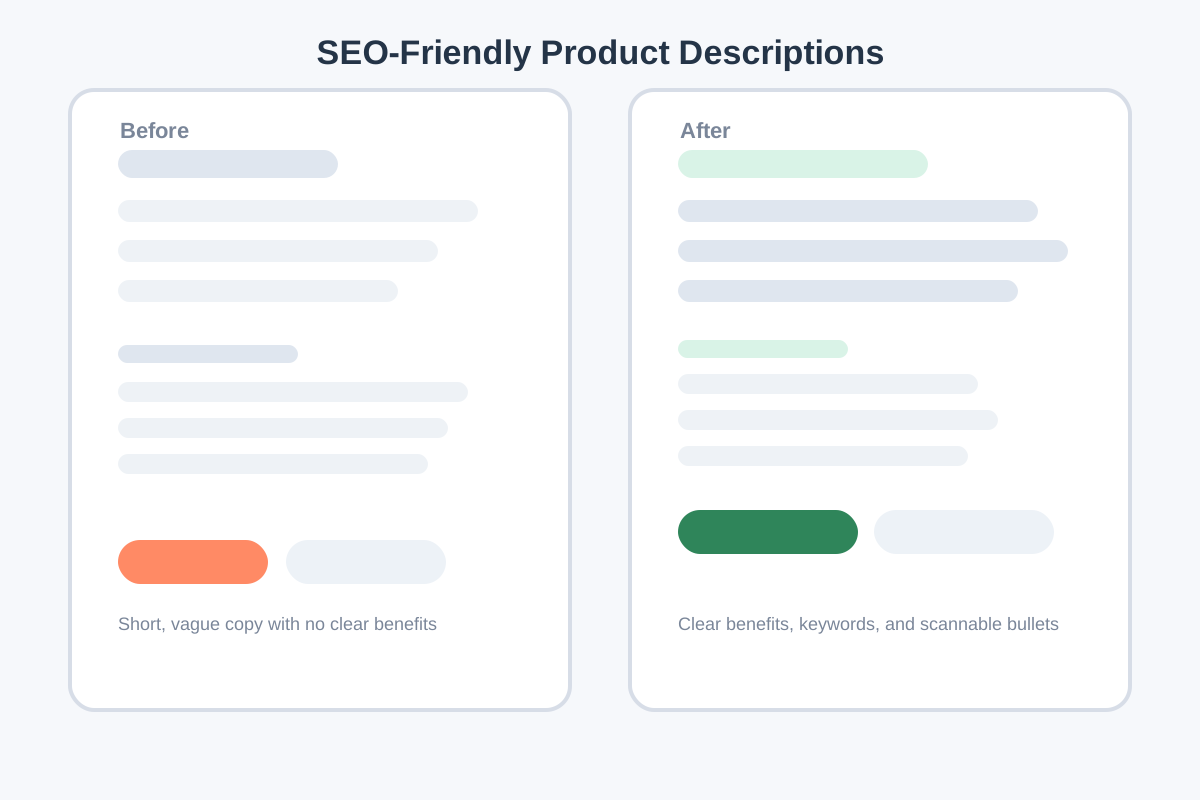
Here is a quick before-and-after example:
| Before | After |
|---|---|
| “This jacket is great. It has a zipper, hood, and pockets.” | “This lightweight waterproof jacket keeps you dry in changing weather, with an adjustable hood, secure pockets, and a breathable fit for daily wear.” |
For store owners using WordPress, it helps to think about the page as both a sales page and a search result. If you are planning broader store improvements, you can also review our e-commerce services for support around structure, content, and storefront growth. And if you want to get back to the main site, the homepage is right there waiting politely.
Review, test, and improve over time
SEO-friendly product descriptions are not a one-time chore. Compare pages with strong traffic and low traffic, then look for patterns. Which descriptions answer questions quickly? Which ones sound generic? Which ones match the search phrase most closely?
You can also test:
- different opening lines
- shorter vs. longer descriptions
- more specific benefit language
- clearer calls to action
Search behavior changes, products change, and customer questions change with them. That is normal. The useful move is to keep improving the copy instead of treating the first draft like sacred stone tablets.
Conclusion
Strong product descriptions support both visibility and conversions. Focus on search intent, choose keywords carefully, write for benefits, and make the page easy to scan. Those small improvements add up.
If you are ready for a practical next step, review one product page today and rewrite the opening paragraph, the bullet points, and the meta description. Small edits can make a larger difference than they look like on a Tuesday afternoon.